Startseite

Forum

Ratgeber

Gruppen

Nützliche Adressen

Gemeinschaft

Rezepte

Kolumne

knocs632
14:52 knocs632 hat ein Thema kommentiert Lernen bei einer Ausstellung:   NURS FPX 4025 Assessment 2: Using Problem Analysis to Improve Nursing Practice Healthcare professionals encounter complex problems that can affect patient safety, staff performance, care quality, and organizational outcomes. Identifying a problem is only the first step toward improvement. Nurses must also understand why the problem occurs, determine which factors contribute to it, and identify practical strategies for addressing its causes. NURS FPX 4025 Assessment 2 provides an opportunity to examine how structured Problem Analysis can support evidence-based nursing practice and lead to meaningful improvements in healthcare. Recognizing Problems Within Clinical Practice The first stage of problem analysis is recognizing that a problem exists. Clinical problems may appear as medication errors, communication failures NURS FPX 4025 Assessment 1, delays in treatment, inadequate documentation, patient falls, infection risks, or gaps in patient education. Nurses are often among the first professionals to notice recurring problems because they work closely with patients and participate in daily care activities. However, observations should be supported by relevant evidence whenever possible. Clearly defining the problem prevents healthcare teams from addressing symptoms without understanding the larger issue. Defining the Core Issue A well-defined problem statement provides direction for further analysis. Instead of describing a concern in broad terms, nurses can identify what is happening, who is affected, where it occurs, and why it matters. For example, saying that "patient care needs improvement" is too general to guide an effective intervention. A more focused description might identify a specific communication gap or recurring delay in a particular care process. A clear problem statement helps the healthcare team establish priorities and determine what evidence is needed. Gathering Meaningful Evidence Problem analysis should be based on reliable information rather than assumptions. Nurses can collect data from patient records, incident reports, staff observations, surveys, interviews, quality indicators, and other appropriate sources. Quantitative information can demonstrate how frequently a problem occurs, while qualitative information can provide insight into staff and patient experiences. The combination of different types of evidence can provide a more complete understanding of the issue. Nurses should ensure that collected information is relevant to the identified problem and handled according to organizational policies. Exploring Root Causes One of the most important elements of Problem Analysis is identifying the underlying causes of an issue. A visible problem may have several contributing factors. For example, repeated documentation errors could be associated with unclear procedures, insufficient training, workload pressures, interruptions, or limitations within an electronic documentation system. Tools such as cause-and-effect diagrams, process mapping, and the "five whys" approach can help healthcare teams explore potential causes systematically. Finding root causes allows nurses to develop interventions that address the source of the problem rather than repeatedly treating its consequences. Examining Contributing Factors Healthcare problems rarely have a single cause. Individual behavior, team communication, organizational policies, technology, workload, staffing, environmental conditions, and available resources may all contribute. A thorough analysis considers these factors without automatically blaming individual employees. A systems-based perspective recognizes that healthcare outcomes are influenced by the environment in which professionals work. Understanding multiple contributing factors can lead to more sustainable solutions. Prioritizing the Most Important Concerns Healthcare organizations may face several problems simultaneously, but resources are often limited. Nurses and leaders therefore need to determine which issues require immediate attention. Priority can be influenced by factors such as patient-safety risk, frequency, severity, number of people affected, organizational impact, and feasibility of intervention. Prioritizing problems helps healthcare teams focus their efforts where they are most likely to produce meaningful improvements. Developing Evidence-Based Solutions After analyzing the causes, nurses can explore potential solutions supported by reliable evidence. Interventions should address the identified contributing factors and be realistic within the healthcare setting. Possible strategies may include staff education, revised procedures, improved communication systems, workflow changes, additional monitoring, or technology-based solutions. Stakeholder input is valuable during this stage. Nurses, patients, administrators, and other healthcare professionals may identify practical considerations that are not immediately apparent. Strengthening Team Communication Communication is frequently connected to clinical problems. Misunderstandings, incomplete handoffs, unclear responsibilities NURS FPX 4025 Assessment 2, and delayed information can affect patient care. Problem analysis can reveal communication gaps and help teams determine where improvements are needed. Standardized communication methods, structured handoffs, team meetings, and clear documentation can support better information exchange. Effective communication also encourages staff members to report concerns without fear of unnecessary blame. Implementing and Monitoring Change Identifying a solution is not enough. Healthcare organizations must implement changes carefully and monitor their effects. Nurses can help establish measurable goals and determine how progress will be evaluated. Appropriate indicators might include error rates, patient outcomes, compliance levels, response times, or patient feedback. Monitoring allows healthcare teams to determine whether an intervention is working. If results are not satisfactory, the strategy can be modified based on new evidence and observations. Encouraging a Culture of Continuous Improvement Problem analysis should be viewed as an ongoing process rather than a one-time activity. Healthcare environments change continuously, and new challenges can emerge as patient populations, technologies, policies, and workflows evolve. A culture of continuous improvement encourages nurses to identify concerns, examine evidence, test solutions, and evaluate outcomes. Leadership support is essential because staff need adequate time, resources, training, and communication to participate effectively. Connecting Problem Analysis With NURS FPX 4025 Assessment 2 NURS FPX 4025 Assessment 2 can help nursing students understand how structured analysis contributes to quality improvement and patient safety. Problem Analysis connects clinical observations with evidence-based decision-making. By defining problems clearly, collecting relevant evidence, identifying root causes, prioritizing risks, implementing solutions, and evaluating outcomes, nurses can contribute to meaningful improvements in healthcare delivery. This process also demonstrates the importance of collaboration. Complex healthcare problems often require input from multiple professionals rather than relying on one person's perspective. Conclusion Problem Analysis is an essential skill for nurses who want to improve healthcare quality and patient outcomes. A structured approach helps professionals move beyond identifying symptoms and investigate the underlying causes of clinical and organizational challenges. For NURS FPX 4025 Assessment 2 , understanding Problem Analysis demonstrates how nurses can use evidence, critical thinking, communication, and teamwork to address healthcare concerns. When problems are carefully analyzed and solutions are continuously evaluated, healthcare organizations can strengthen patient safety, improve efficiency, and create a stronger foundation for high-quality nursing practice.
deneiffert
09:43 deneiffert hat ein Thema kommentiert Eine neue Leidenschaft entdecken:  It's like finding a hidden track on a familiar album, a delightful surprise. Or perhaps, encountering an antique map and deciphering its cryptic symbols leading to untold adventures. The article delves into this very phenomenon, the glorious act of uncovering a new passion. My own similar problem arose when I stumbled upon Buckshot Roulette.
othella
12.09.2026 03:39:57 othella hat ein Thema kommentiert Besitzstörung mit dem Fahrrad:  That's a frustrating situation to deal with! It's surprising how often bike-related issues can escalate into legal complexities. I hope you find a swift and fair resolution. Speaking of navigating tricky paths, I always enjoy a good challenge, kind of like trying to keep things balanced in a game. It reminds me of the fun physics in Eggy Car! Best of luck with everything
melieotton
10.09.2026 04:18:13 melieotton hat ein Thema kommentiert Besitzstörung mit dem Fahrrad:  The article, a German gem, navigates this nuanced nuisance. I once, in a bustling market, found my path blocked by a carelessly discarded bike, a real life Connections Game puzzle to navigate.
 
derpington
05.11.2020 15:07:52 derpington hat einen Ratschlag gegeben Ratgeber: Spirale schon ausprobiert?!
derpington
05.11.2020 15:06:30 derpington hat einen Ratschlag gegeben Ratgeber: Gewissheit bekommst du nur beim Arzt.
malou
26.02.2015 17:17:09 malou hat einen Ratschlag gegeben Ratgeber: tut mir leid :/ such im internet nach einer selbsthilfegruppe vielleicht gibt es eine in deiner nähe oder ein internetforum. ansonsten kannst du deinen arzt danach fragen vielleicht hat er eine lösung für dich.
malou
26.02.2015 17:12:26 malou hat einen Ratschlag gegeben Ratgeber: nicht jeder bekommt sie oder alle 4... ich hatte drei wurden jedoch alle entfernt. du kannst deinen zahnarzt oder kieferorthopäden fragen und ggf eine zweitmeinung einholen. wenn sie weh tun würde ich sie schon entfernen lassen viel glück
 
Ich möchte alles erleben
Für alle, denen das nicht reicht, was sie bereits kennen und wissen. Für die, die gerne ausgefallene Sportarten machen oder sich gerne in verschiedene Richtungen weiterbilden wollen. Und natürlich auch für die, die sich hier ein paar dementsprechende Ideen einholen oder Erfahrungen austauschen möch
Serienjunkies
Für Leute die süchtig nach Fernsehserien sind
Musiker
Für alle die Musik in all ihren Facetten lieben
News Update
Für alle, die gerne unterwegs sind!
 
 
20.10.2015  |  Kommentare: 0

Feministisches Meisterstück mit knallharter Action

Feministisches Meisterstück mit knallharter Action
Mad Max: Fury Road


Im postapokalyptischen Australien, einer todbringenden Einöde, in der Wasser DAS Privileg schlechthin ist, herrscht das Gesetz der Wildnis: Der Stärkere überlebt.


In diesem Ödland kämpfen die Menschen der Unterschicht ums Überleben, während der Anführer der hoch gelegenen Zitadelle, Immortan Joe, der sich selbst zu einer Art Gottheit erhoben hat, über alles herrscht, das wichtig und essentiell ist.


Eines Tages stellt sich die Heerführerin Imperator Furiosa (Charlize Theron) gegen das Regime, mit einer besonderen Fracht im Schlepptau…



WE ARE NOT THINGS

Der Erfolg des lang ersehnten neuesten Streifens der „Mad Max“-Saga war vorauszusehen. Doch eines wurde von niemandem vorausgesehen. "Mad Max: Fury Road" ist nicht der gewohnt stumpfe Actionfilm, den man sich vom Trailer her erwartet hätte.

Was die männlichen Actionfilmfans anbelangt, war der Großteil derer mehr als überrascht, größtenteils negativ, dass nicht der Mann (wie vom Titel her anzunehmen wäre) der Held der Geschichte ist. Max Rockatansky aka „Mad Max“ (Tom Hardy) dient zwar als Einstieg in den Plot des Filmes, rückt jedoch in den Hintergrund der Erzählung.


IMDB.COM:
“A woman rebels against a tyrannical ruler in post-apocalyptic Australia in search for her homeland with the help of a group of female prisoners, a psychotic worshiper, and a drifter named Max.”
 
Wie aus der englischen Kurzbeschreibung des Filmes auf imdb.com zu erkennen ist, stehen die unterdrückten Frauen im Vordergrund der Geschichte. Bald wird klar, dass es sich nicht um einen 0815-Postapokalypse-Sci-Fi-Film handelt.
 

 „Mad Max: Fury Road“ unterscheidet sich in einem Punkt von allen anderen dieser Art: Der Fokus liegt – wie gesagt – auf den Frauen.

Wer sich einen Actionfilm erwartete, in dem der große Held die arme Frau in Not befreit, wurde gnadenlos enttäuscht. Dies führte auch dazu, dass der Film beim männlichen Publikum ganz und gar nicht gut ankam. Der große "badass" des Filmes ist eindeutig Furiosa.

Uns kam beim Lesen einiger männlicher User-Reviews ein ganz bestimmter tumblr-post in den Sinn:
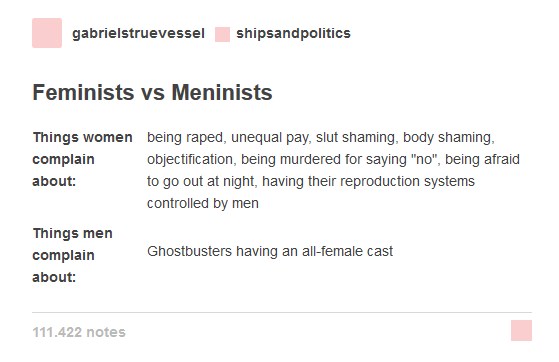
 

Bleibt nur noch eine Frage: Soll man da lachen oder weinen?


WTF did I just watch?!

Visuell ist der Film mehr als eindrucksvoll. Regisseur und Drehbuchautor George Miller verzichtete beim Dreh dieses Actionspektakels so gut es ging auf die Green-Screen-Komponente, die aus Filmen heutzutage nicht mehr wegzudenken ist und setzte mehr auf physische Action, von den Schauspielern selbst umgesetzte Stunts und echte Szenerien statt nachträglich eingefügte Hintergründe und digitale Sets. CGI wurde ausschließlich zur Betonung und Verbesserung verwendet – Imperator Furiosas Armprothese beispielsweise wurde mittels Computereffekten eingefügt.

 

Die Szenerie an sich ist nicht besonders – Wüste, Sand, Stein. Doch was sich auf der sogenannten „Fury Road“ abspielt, ist eine Klasse für sich. Der Film spart weder an nervenaufreibender Action noch an ausgefallenen, schrägen Kostümen und Make-up-Effekten.

Die häufigsten Kritikpunkte an diesem sonst so hoch gepriesenen Film-Werk sind die (vermeintliche) Unoriginalität des Plots, „zu wenig Dialog“ und der in den Hintergrund gerückte Max. Trotz dessen ist die Story nicht so flach, wie es uns der ein oder andere Kritiker weismachen möchte.

 

Man könnte natürlich in Versuchung geraten, „Mad Max: Fury Road“ als hirnlosen Actionfilm abzutun. Doch so simpel die Story auch ist und selbst, wenn die Prämisse keine so neue ist – Unterdrückung der Schwächeren, einzelner Machthaber in einer post-apokalyptischen Welt usw. – so einfach ist die Sache dann doch wieder nicht.  

Trotz seiner Überladenheit hat der Film Gefühl und Tiefe – wenn man sich darauf einlässt. „Mad Max: Fury Road“ ist so bombastisch und übervoll in seiner Action, dass man so manche „Holy Shit!“ und „What the fuck?”-Ausrufe kaum unterdrücken wird können.

Stichwort: „Feuer speiende E-Gitarre“. WTF indeed.

 

Was uns außerdem sehr gefallen hat: Der Film ist sehr hell. Im Normalfall sind die Schauplätze in Filmen, die in der Zukunft spielen und die die Welt als einen zerstörten und für Menschen nahezu unbewohnbaren Ort zeigen, extrem dunkel gehalten. Und so interessant die Stimmung ist, die so eine Art der Kinematografie mit sich bringt, so gern sehen wir es doch ab und zu, wenn wir – naja, etwas sehen können eben.
 
Sabine Stenzenberger
Oktober 2015
Bilder: @MadMaxMovie/Twitter.com und Tumblr.com



Erklärung zur Rolle der Imperator Furiosa:
Furiosa is an Imperator, a war leader in Immortan Joe's fanatical army. Her left arm was severed below the elbow, so she wears a makeshift prosthetic limb. As an Imperator she is issued a sacred steering wheel fetish that allows her to drive and command a war wagon. In the beginning of the movie she is seen as so loyal and capable that her War Boy crew follows her unquestioningly when she radically deviates from Immortan Joe's orders.

Furiosa was kidnapped by the forces of The Citadel when she was a child. She was a member of The Vuvalini - a matriarchal tribe of the Clan of Many Mothers that dwelled in The Green Place. Furiosa believes this is her only chance to return to her people and a better life. She helps the Wives to escape from Immortan Joe - partly because she believes they should be free and mostly because it will hurt and anger him.

Furiosa drives the War Rig, a heavily rebuilt Czech Tatra T815 18-Wheeler Truck. It has a powered retractable plow blade in front. The cab is extended by adding the back half of a 1940s Chevrolet Fleetmaster sedan that has "suicide doors" that are back-hinged and swing backward rather than front-hinged and swing forward. It pulls a large water tanker and an articulated fuel pod that holds 3,000 gallons of guzzoline. The cab has a left-side skeleton arm painted on the upper part of the driver's side door - indicating that it is Furiosa's personal vehicle.
(imdb.com)




MAD MAX: FURY ROAD

Regie: George Miller

Drehbuch: George Miller, Brendan McCarthy, Nico Lathouris

Darsteller:
Tom Hardy     ...     Max Rockatansky
Charlize Theron     ...     Imperator Furiosa
Nicholas Hoult     ...     Nux
Hugh Keays-Byrne     ...     Immortan Joe
Josh Helman     ...     Slit
Zoë Kravitz     ...     Toast the Knowing
Rosie Huntington-Whiteley     ...     The Splendid Angharad
Riley Keough     ...     Capable
Abbey Lee     ...     The Dag
Courtney Eaton     ...     Cheedo the Fragile
John Howard     ...     The People Eater
Richard Carter     ...     The Bullet Farmer
Nathan Jones     ...     Rictus Erectus


Kommentare

Facebook automatisch im meinem Facebook-Profil anzeigen
Twitter automatisch im meinem Twitter-Profil anzeigen 

die-frau.com
Forum der Rubrik Weiter nach alle
Gruppe der Rubrik Weiter nach alle
Buchclub
Buchclub
Für alle Literaturfans...
Anzahl Mitglieder: 15
Serienjunkies
Serienjunkies
Für Leute die süchtig nach Fernsehserien si...
Anzahl Mitglieder: 18
Musiker
Musiker
Für alle die Musik in all ihren Facetten li...
Anzahl Mitglieder: 13

Der Mann des Tages


Rezept der Woche

Zitronenmarmelade

Kolumne  
Marvel(lous)!

On Thursdays, we're Teddybear Doctors

Marvel(lous)!

Umfrage Weiter nach alle

Ich kaufe mir Kleidung...

Nützliche Adressen Verzeichnissuche